High-definition video is enhancing veterinary surgery, client relations, and medical record accuracy. By using specialized PTZ cameras and 4K systems, practices can offer visual proof of care to owners, build high-fidelity staff training libraries, and maintain secure documentation. This technology reduces communication disputes and supports a “connected care” environment aligned with modern accreditation and welfare standards.
Veterinary clinics are shifting from handwritten notes to dynamic video records. A growing number of practices now rely on high‑definition PTZ (Pan-Tilt-Zoom) Medical Grade Cameras, endoscopic video scopes, and integrated conferencing systems to capture surgeries, routine examinations, and diagnostic procedures. This visual documentation not only enriches clinical insight but also meets rising expectations for transparency and education.
Why Video Matters in Veterinary Medicine
Improving Skills in Veterinary Training
Video recordings provide a reusable, high‑fidelity teaching resource for veterinary teams. When a senior surgeon records a complex procedure, trainees can replay the procedure at their own pace, pausing to study instrument handling, tissue response, and decision points.
Research indicates that a blended learning model improves technical proficiency. For instance, a study in Germany found that students commonly prepare for hands‑on learning by watching instructional videos at home on tablets or laptops, then spend in‑person sessions practicing and refining those skills1. This approach strengthens skill acquisition and helps reduce live‑animal exercises, aligning training with regulatory animal welfare requirements.
More broadly, veterinary schools use video libraries to create standardized training modules, ensuring all residents receive uniform instruction regardless of their location. A multimodal, student‑centered approach that combined videos, 3D models, interactive tools, and active learning was found to improve student engagement and exam performance (5 to 7 percentage points) while reducing cadaver use by about 20%2.
Beyond the classroom, video also supports remote education and global collaboration, making it feasible to conduct distance training sessions for professionals in varied locations. For practicing veterinarians, recording procedures also allows them to review their own work and refine techniques through self-reflection, thereby encouraging a culture of continuous improvement.
Strengthening Client Communication
Pet owners often demand visual proof of the care their animals receive. A short clip of a dental cleaning or an endoscopic examination can demystify the procedure, reduce anxiety, and reinforce the value of recommended treatments.
A study published in the Journal of the American Veterinary Medical Association found that clients are seven times more likely to adhere to dental and surgical recommendations when they receive a “clear recommendation.”3 This process is significantly bolstered by visual evidence, which transforms a verbal suggestion into a visible necessity.
Furthermore, the 2023-24 Insight Report from the Veterinary Client Mediation Service notes that 60% of pet owner concerns relate to standards of care, with a 31% increase in disputes specifically regarding communication and consent4.
Using video to provide a shared understanding of a pet’s condition can effectively bridge communication gaps between veterinary staff and owners. Clinics can share encrypted links directly with owners to maintain privacy while building transparency. These recordings offer an objective record of the procedure, helping to clarify questions and confirming that both parties are on the same page.
Record Keeping and Compliance
Handwritten records can be difficult to read and are easily lost or lacking in detail. Video archives help address these issues by providing permanent, timestamped documentation that remains accessible for follow-up visits or legal reviews.
According to the AAHA Standards of Accreditation5, medical records must be “clear, concise, secure, and thoroughly documented” to serve as reliable resources for patient care and legal protection. AAHA further emphasizes through their Telehealth Guidelines6 that digital tools — including video messaging and recorded assessments — are essential for creating a “Connected Care” environment.
Video metadata (e.g., camera angle, zoom level, and lighting conditions) can be indexed alongside electronic health records (EHRs) and provide reliable reference points required to meet stringent professional standards.
Choosing the Right Video Solution for Your Veterinary Practice
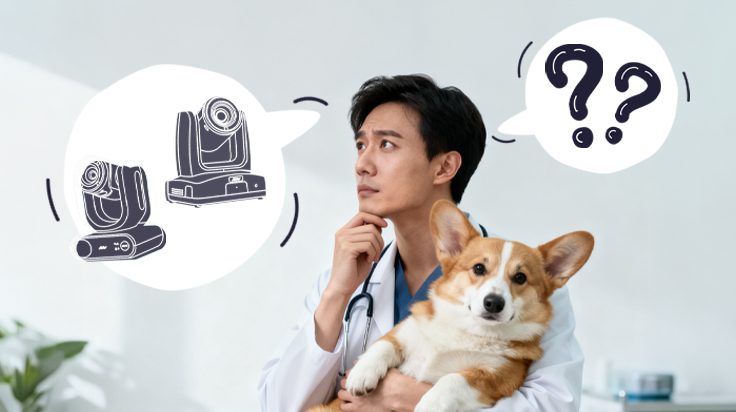
Medical practice environments demand strict safety and regulatory compliance. For example, support for UV disinfection allows Medical Grade Cameras to be fully sanitized to meet rigorous infection-control standards and reduce the risk of healthcare-associated infections. Equally crucial is medical-grade electromagnetic interference (EMI) shielding, which reduces the risk of interference with nearby sensitive electronic equipment.
Consider the following criteria when selecting a camera system to support daily workflows without disruption while aligning with budget and compliance requirements:
| Criterion |
Why It Matters |
Features Available in AVer Medical Grade Cameras |
| Fine details (e.g., tissue texture) require at least 1080p; 4K works even better and for record archives |
Output resolutions: 4K, 1080p, 720p |
| Allows close‑up capture without moving the camera |
Optical zoom: 20X to 30X. Pan: ±170°, Tilt: +90°/−90° |
| Provides sharp close-ups, even when shadows or poor lighting affect the room |
0.5 to 0.7 lux sensitivity |
| Seamless upload reduces admin burden |
Provides sufficient I/O and supports multiple transmission and control protocols ready for integration. |
| Protects client data and meets regulatory standards |
End‑to‑end encryption. Medical‑grade EMI certification. |
Implementing Video in Veterinary Workflows
Moving from hand-written notes to a video-based system works best when introduced in manageable stages. This approach allows the team to adjust to new hardware and digital filing methods without slowing the pace of daily operations.
Pilot Phase
Begin by setting up equipment in one examination room to identify how recording fits into your current routine. Record a small sample of varied procedures to evaluate the clarity of the footage and test how well your local network or cloud service handles the file sizes. This initial test period is the ideal time to fine-tune the technical setup and gather feedback from assistants who will be handling the equipment daily.
Standard Operating Procedure (SOP)
Develop a brief set of guidelines to keep documentation consistent across the practice. This document should define optimal camera angles for different types of exams, specific file-naming formats for easy EHR referencing, and clear rules on how long videos are kept before being archived or deleted.
Staff Training
Practice sessions allow staff to train on zooming and positioning PTZ cameras while remaining outside the sterile area. Training should also cover basic editing, enabling staff to quickly trim longer recordings into short and precise clips that are easy for clients to view and understand.
The Upshot
Transitioning from handwritten notes to high‑definition video can reshape veterinary practice on three fronts: training, client communication, and record keeping. By capturing procedures with medically certified PTZ cameras, endoscopes, and compliant conferencing systems, veterinary clinics create transparent and legally robust documentation. AVer’s Connected Health Solutions extend that capability by integrating Medical Grade Cameras, secure telehealth, and workflow tools tailored to clinical environments to enable data‑driven and personalized care.
To learn more about AVer Medical Grade Cameras, please see:
https://presentation.aver.com/lines/connected-health
Frequently Asked Questions
How does video recording improve surgical safety and outcomes?
Video allows surgeons to review their techniques for self-improvement and provides a precise record for post-operative analysis. This helps teams identify potential complications early and standardize surgical protocols across the practice.
Does recording procedures increase the risk of legal liability?
On the contrary, clear video documentation often serves as a veterinary practice’s best defense. It provides an objective, timestamped account of the care provided, which can quickly resolve disputes regarding consent or clinical standards.
Is it difficult to integrate video files with my existing veterinary practice management software?
Medical Grade Cameras offer API integrations that allow video files to be linked directly to a patient’s electronic health record. This reduces manual data entry and ensures all visual assets are easy to retrieve.
How do I maintain pet owner privacy when sharing video clips?
Practices should use secure, encrypted links or password-protected portals to share footage. Establishing a clear SOP for data handling and client consent ensures compliance with privacy regulations.
Will adding cameras to the OR distract the surgical team?
No, PTZ (Pan-Tilt-Zoom) cameras are designed to be controlled remotely or via presets. This allows the team to capture high-detail footage without needing a cameraman in the sterile field or physical adjustments to the equipment during surgery.
References
Müller, Lina R., Andrea Tipold, Jan P. Ehlers, and Elisabeth Schaper. 2019. “TiHoVideos: Veterinary Students’ Utilization of Instructional Videos on Clinical Skills.” BMC Veterinary Research 15 (1): 326. https://doi.org/10.1186/s12917-019-2079-2. ↑
Aiyan, Ahmad Al. 2025. “Enhancing Veterinary Anatomy Education Outcomes Through a Multimodal, Student-Centered Approach.” International Journal of Learning Teaching and Educational Research 24 (6): 142–59. https://doi.org/10.26803/ijlter.24.6.7. ↑
Kanji, Noureen, Jason B. Coe, Cindy L. Adams, and Jane R. Shaw. 2012. “Effect of Veterinarian-client-patient Interactions on Client Adherence to Dentistry and Surgery Recommendations in Companion-animal Practice.” Journal of the American Veterinary Medical Association 240 (4): 427–36. https://doi.org/10.2460/javma.240.4.427. ↑
“Veterinary Client Mediation Service Releases 2023-24 Insight Report | Veterinary Client Mediation Service.” 2025. Veterinary Client Mediation Service. September 1, 2025. https://www.vetmediation.co.uk/resources/news/veterinary-client-mediation-service-releases-2023-24-insight-report/. ↑
“AAHA Standards of Accreditation.” 2025. October 1, 2025. https://www.aaha.org/resources/aaha-standards/. ↑
“2021 AAHA/AVMA Telehealth Guidelines for Small-Animal Practice.” 2021. January 18, 2021. https://www.aaha.org/resources/2021-aaha-avma-telehealth-guidelines-for-small-animal-practice/. ↑