With super-aged populations rising, exergaming — EdTech that combines physical activity with cognitive challenges — is redefining lifelong learning by combining physical and cognitive challenges to significantly boost older adults’ mental skills and overall well-being. To make these benefits widely accessible and narrow the digital divide, a hybrid technology model is needed that uses features like AI auto tracking and high-definition audio-visuals to ensure remote seniors receive safe, high-quality instruction and maintain vital social connections.
At the EdTech Taiwan 2025 exhibition, the main halls were dominated by the familiar flash and noise of the industry: AI tutors for universities and coding robots for K-12 students. Yet, looking past the spectacle designed for the young, a new wave of learning solutions designed specifically for an aging population was also evident.
We traditionally view education technology as a mechanism to prepare students for the workforce. But as we enter the era of the super-aged society, where the number of people aged 65 and older is projected to be over 1 billion by 2030 (11.7% of the world’s population)1, the definition of the “classroom” must expand to include senior centers, community halls, and living rooms.
Not only is this demographic shift a social concern, but it also poses significant economic and labor market risks globally2, putting pressure on pension systems and long-term care3. Against this backdrop, the goal of education shifts from employability to longevity and quality of life4.
However, a critical realization in lifelong education is that improving physical health is only half the battle. Technology focused solely on step counting or heart rate monitoring is not enough. True longevity requires supporting a person’s entire well-being, which encompasses psychological satisfaction, social connection, and positive emotion.
Exergaming vs. Traditional Exercise: Why “Serious Play” is a Winner
In understanding the EdTech industry’s pivot toward interactive well-being, the data provides compelling evidence, such as findings from a quasi-experimental study conducted in Taipei senior centers. Certain studies compared traditional, instructor-led exercise routines against exergaming, which consists of video games requiring physical movement and cognitive engagement.
The findings suggest that gamified learning works better than rote repetition, not just for the body, but for the mind and spirit.
Dual-Task Advantage
Building on studies of “dual‑task” and exergame training in older adults, some researchers suggest that combining movement with cognitively demanding tasks can enhance learning and cognitive benefits, because learners must coordinate physical actions with rapid mental responses. Seniors playing exergames showed significant improvements in executive function, specifically in inhibitory control, which is the ability to suppress impulsive responses.
Meta-analyses suggest that combined cognitive-motor training interventions provide superior cognitive improvement compared to physical exercise alone in healthy older adults, and are echoed in other studies, too5. This dual-task approach promotes neuroplasticity and enhances gait performance, which can be an important factor in reducing fall risk. By combining movement with the cognitive load of a game, the aging brain is kept responsive in ways that simple physical repetition cannot achieve.
Critical Well-being Factor
While physical metrics improved, the psychological impact was just as profound. Researchers in Singapore showed that a group of students using exergaming felt much better overall in terms of well-being compared to the group doing standard exercises.
This finding is consistent with those regarding lifelong learning programs for older adults. Large surveys, such as the English Longitudinal Study of Ageing (ELSA), suggest that when seniors join non-formal courses (like music or art), they report a significant boost in happiness and life satisfaction. However, pure academic classes or basic gym routines often do not provide this same psychological lift, even when accounting for other variables.
The fun nature and sense of achievement from exergaming, which involves rewarding challenge and achievement, drive people to stick with the program. This sustained engagement helps to lessen the sense of loneliness that many older people face.
The “Last Mile” Problem Limiting Exergaming Benefits
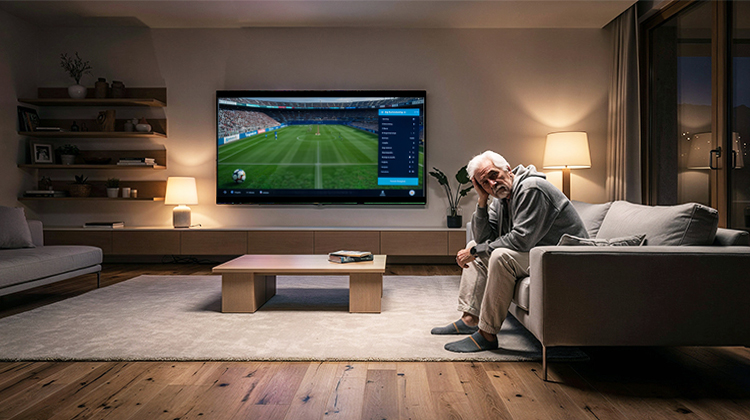
The science is sound, but putting these research findings into widespread practice is complicated. Successful studies take place in controlled environments with specialized instructors. How can high-quality, interactive wellness coaching reach the millions of older adults who might live alone, struggle with mobility, or simply reside far from a dedicated facility?
If technology is used that makes the experience feel distant or impersonal, the crucial element of social connection and presence that drives success and well-being is lost.
Hybrid EdTech Solution: Bridging the Digital Divide
To support true well-being in lifelong education, a hybrid model of using technology to recreate the warmth and clarity of the in-person experience is needed. Importantly, research6 indicates that this positive effect is achieved only when older adults perceive the technology to be beneficial and accessible, requiring programs to directly address the persistent digital divide faced by older adults.
This approach depends on three main technical elements designed to minimize frustration and build strong connections:
Autonomous Broadcasting for Safety
In an exercise class, the instructor must move constantly to demonstrate posture. For a senior joining remotely, a static webcam can be confusing if the teacher moves out of frame.
AI-driven Auto Tracking Cameras solve this by acting as a virtual cameraman, smoothly following the instructor. This allows one teacher to guide a local class while streaming to hundreds of others, ensuring every remote participant has a clear view to mimic movements safely.
Visual Clarity as Cognitive Support
Since vision often degrades with age, low-quality video is a major barrier to learning and continued participation. Clear, high-definition 4K visuals are not just a convenience but a requirement for following exergames. It reduces the mental effort needed and allows seniors to focus on the activity rather than squinting at a blurry screen, which can lead to frustration and disengagement. The ability to see and be seen on video enhances social presence, which is critical for engagement and reducing isolation7.
To further enhance social connection, hybrid setups should use advanced audio systems, such as beamforming microphones, to ensure that a senior asking a question in class is heard clearly by those who are joining the session remotely. Likewise, a conference-grade camera-and-speaker setup can clearly relay remote comments back to the instructor and in-person attendees with minimal latency and distortion. When both sides can hear each other effortlessly, the session becomes an active community where encouragement is exchanged, strengthening social ties.
The Future of Ageless Learning: Integrating Longevity and Education
Learning never stops, and this was on full display in the innovations at EdTech Taiwan 2025. As the lines between healthcare and education blur, gamified exercise classes can play a part in cognitive therapy. Technology should not just be about efficiency but also focus on empathy. By using high-quality audio-visual solutions, an infrastructure of care is established, giving older adults the tools to learn, connect, and improve their quality of life regardless of their location.
Frequently Asked Questions
What is the fundamental difference between exergaming and basic exercise?
Exergaming uses a dual-task approach, combining physical movement with simultaneous cognitive challenge. This results in superior benefits for executive function and agility compared to physical activity alone, directly supporting independence and neuroplasticity.
Why is a technology-enabled hybrid model necessary for this type of education?
Technology solves the “last mile” problem, allowing specialized wellness instruction to reach millions of older adults regardless of location, mobility, or living situation. It is a compelling way to scale high-quality programming safely and effectively.
How does exergaming affect well-being beyond physical fitness?
The fun, rewarding nature of the activity significantly improves psychological well-being and motivation to stick to the program. Promoting sustained engagement acts as a powerful tool for reducing loneliness and social isolation, a critical health risk for the elderly.
What are the key technological pillars required for a successful hybrid program?
Success requires three main elements: (1) AI Auto Tracking for safe, clear visual instruction; (2) high visual clarity (4K) to reduce cognitive strain; and (3) advanced audio (e.g., beamforming) to ensure two-way communication and build a social community.
What is the long-term strategic value of investing in these programs?
The strategic value is moving toward proactive longevity. By improving balance, cognition, and well-being, these programs may contribute to delaying cognitive decline, ultimately easing the economic burden on healthcare and long-term care systems.
References
“World Population Prospects.” https://population.un.org/wpp/. ↑
Atkinson, Grace, and Gayle Markovitz. 2025. “The Gap Is Widening Between Super-ageing and Youthful Populations. Experts Explain the Implications.” January 15, 2025. https://www.weforum.org/stories/2025/01/super-ageing-and-youthful-populations-global-risks-report/. ↑
“Ageing.” OECD. https://www.oecd.org/en/topics/ageing.html. ↑
Ohnishi, Masaru. 2024. “‘Age Tech’ in an Aging Society.” https://www.mitsui.com/mgssi/en/report/detail/icsFiles/afieldfile/2024/04/23/2403iohnishie.pdf. ↑
Glatt, Ryan M., Corwin Patis, Karen J. Miller, David A. Merrill, Brendon Stubbs, Manuela Adcock, Eleftheria Giannouli, and Prabha Siddarth. 2024. “The ‘FitBrain’ Program: Implementing Exergaming & Dual-task Exercise Programs in Outpatient Clinical Settings.” Frontiers in Sports and Active Living 6 (December): 1449699. https://doi.org/10.3389/fspor.2024.1449699. ↑
Gately, M.E., Trudeau, S.A. 2023. “An Online Learning Experience Simulating Video Telehealth With Older Adults: Student Perceptions.” Journal of Technology in Behavioral Science 9 (1): 154–63. https://doi.org/10.1007/s41347-023-00363-w. ↑
Kaveladze, Benjamin T., Robert R. Morris, Rosa Victoria Dimitrova-Gammeltoft, Amit Goldenberg, James J. Gross, Judd Antin, Melissa Sandgren, and Melissa C. Thomas-Hunt. 2022. “Social Interactivity in Live Video Experiences Reduces Loneliness.” Frontiers in Digital Health 4 (March): 859849. https://doi.org/10.3389/fdgth.2022.859849. ↑