In the past few years, video conferencing has gone from being a critical tool during the pandemic to a cornerstone of the modern professional experience. What was once a temporary fix for remote work has evolved into a sophisticated ecosystem that defines how we collaborate, innovate, and connect across borders. From the seamless integration of AI that acts as a digital teammate to the rise of hyper-flexible workspaces and even a newfound commitment to sustainability, the technology is no longer just about seeing a face on a screen — it’s about creating a workspace that is more intuitive, engaging, and responsible than ever before.
Trend 1: AI in Video Conferencing
Artificial intelligence has officially graduated from the "experimental" phase to become the backbone of effective communication. In 2026, there are a variety of AI-powered technologies that help meeting participants increase productivity, whether it's meeting flow automation, syncing follow-up tasks to project management tools, or even real-time transcription and translation for global teams.
Some AI like Copilot and Gemini work seamlessly for users using Microsoft and Google ecosystems, while Zoom AI Companion provides great automated note-taking and meeting summaries. AI technology like facial and voice detection enable features that support meeting equity, such as Smart Composition, Auto Tracking, and Voice Tracking, readily available with devices like the VB370A. With deepfake concerns growing ever more present, there is both video and audio deepfake detection for real-time meetings, alerting meeting participants when others utilize digital face and voice tampering techniques.
Trend 2: Flexible Office Spaces
Organizations are fundamentally redesigning meeting spaces to prioritize flexibility, inclusivity, and productivity. To reduce the number of rooms sitting empty and underutilized, more businesses are transforming their traditional meeting rooms into multi-purpose flexible spaces to meet the dynamic needs of modern hybrid teams.
Examples of this shift include the rising demand for divisible rooms that can scale up or down based on the day's requirements. One day, a large room may be used for a company-wide meeting, and next it could be divided into smaller spaces to accommodate multiple smaller teams. This introduces a critical need for conferencing hardware and smart room management systems to help businesses manage facilities and resources effectively.
Trend 3: Multi-Camera Solutions
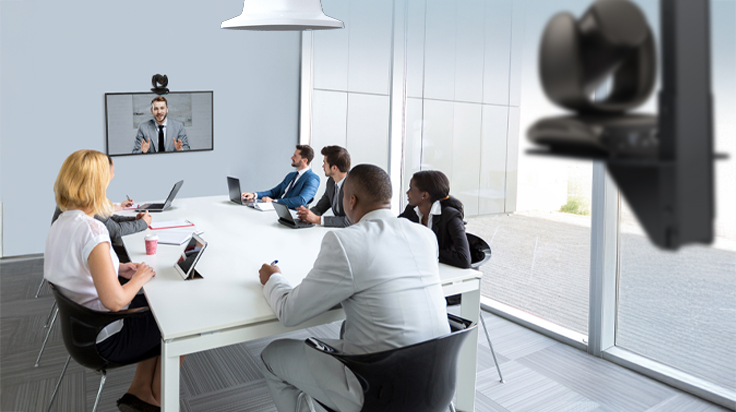
Multi-camera solutions are allowing businesses to take their meeting game to the next level. This approach enhances attention, clarity, and immersion for remote attendees by moving far beyond the traditional “single static view.” By introducing multiple angles, online meetings and conferences can offer dynamic engagement through boosting information retention, improving meeting equity, and providing professional broadcast-quality.
Professional camera and audio systems empower these professional grade meeting experiences. There are multi-camera setups designed for everything from live presentations, panel debates, and webinars. Whether it’s pairing a video bar with a second camera or connecting multiple cameras through matrix tracking boxes, these setups ensure optimal visual coverage of the virtual meeting or event. With the support of advanced PTZ and AI Tracking functionality, video streams can seamlessly switch to whoever is speaking, allowing audiences to follow the meeting without difficulty.
Trend 4: Eco-friendly Solutions
As businesses increasingly prioritize their ESG goals, the sustainability of tech investments is under the microscope. In 2026, the energy footprint of video conferencing hardware — from standby power use to lifecycle impact — is a major focus area for decision-makers.
Key examples of this shift include smart factory management processes that drastically improve power efficiency during the manufacturing phase. Additionally, companies are actively reducing their environmental impact through the use of less packaging and the integration of Post-Consumer Recycled (PCR) packaging materials.
Frequently Asked Questions
How is AI changing video conferencing equity in 2026?
AI improves meeting equity by using facial and voice detection to ensure every participant is seen and heard clearly. Technologies like Smart Composition and Auto Tracking — found in devices like the AVer VB370A and CAM570 — automatically frame individual participants at eye level, preventing remote viewers from feeling like passive observers in large rooms.
Does implementing AI in VC require additional cost, effort, or complexity?
Not necessarily. Many 2026 trends are built into existing ecosystems. AI features like Microsoft Copilot and Zoom AI Companion work within those platforms, and hardware like the AVer VB370A is specifically designed to integrate with Zoom Rooms to enable features like Smart Composition and Auto Tracking without replacing the entire room infrastructure.
Are multi-camera and AI features hard to use?
No, modern solutions are designed for ease of use with minimal technical knowledge required. Advanced AI tracking (like Presenter and Zone tracking) and multi-camera switching function automatically through the hardware, while devices like the VB370A offer a "plug-and-play" experience powered by Android OS to simplify the user experience.
Can AI detect deepfakes in real-time video meetings?
Yes, modern video conferencing platforms now integrate audio and video deepfake detection to alert participants of digital tampering. These systems analyze anomalies in voice patterns and facial rendering during live streams. This security layer is becoming essential for high-stakes corporate communication to prevent fraud and maintain meeting integrity.
References